WARSAW, Poland. Today, Allied Command Transformation (ACT) and the NATO-Ukraine Joint Analysis, Training and Education Centre (JATEC) concluded the 19th NATO Innovation Challenge, “Persistent Airfield Denial,” after nine finalist teams presented solutions aimed at preventing, disrupting and significantly complicating an adversary’s ability to generate and sustain air operations over time.
The challenge started from a practical problem. An airfield can be damaged and still return to use. Runways can be repaired. Aircraft can be dispersed. Fuel, ammunition and support functions can be relocated or restored. A single successful strike may interrupt operations, but the effect can be temporary.
That ability to recover comes from the way an airbase functions as a system. Runways, fuel, munitions, maintenance, air defence, logistics, command infrastructure and ground support all contribute to its ability to launch and recover aircraft. Persistent denial therefore requires effects that reach across that system and make recovery slower, more difficult and more costly.
The lessons emerging from the war against Ukraine remind us that innovation cannot wait for tomorrow. We must learn from today’s battlefield, adapt rapidly, and turn those lessons into practical solutions. The ideas we recognize today demonstrate that innovation is not simply about creating something new, it is about solving real operational problems and delivering capabilities that work when they matter most
– Major General Christian Brejner Ishøj
NATO-Ukraine Joint Analysis Training and Education Centre Commander
Different Ways to Create Persistence
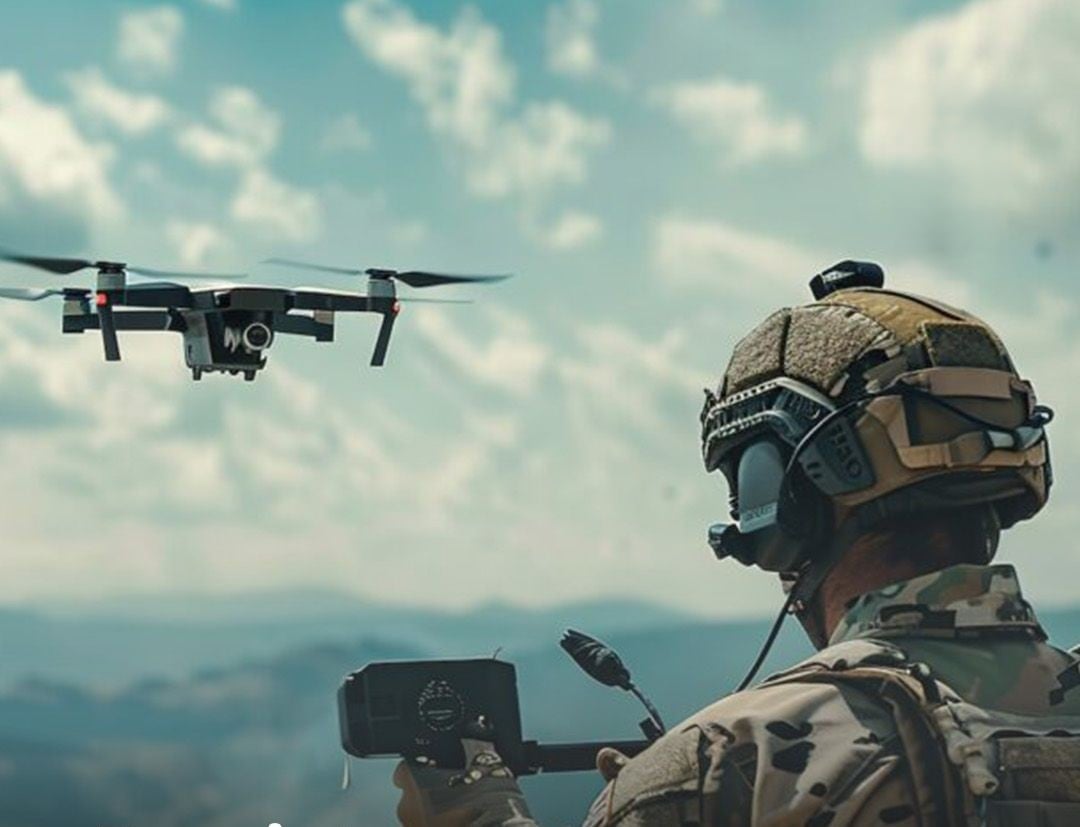
Several finalists proposed uncrewed platforms or combinations of systems, designed to reach contested areas and create repeated effects over time. Some emphasized numbers, using multiple relatively affordable systems to place pressure on several parts of an airfield. Others focused more heavily on endurance, range or the ability to return to an area after the initial engagement.
Other submissions approached the problem through distributed systems, collaborative behaviour or alternative delivery concepts. Instead of depending on one platform performing one mission, these approaches spread tasks across multiple systems or separated the delivery of an effect from the moment it was ultimately employed. The proposals showed several possible ways to make recovery by an adversary slower, more difficult and more costly for an adversary.
Mass, Coordination and Resilience
The Challenge also asked competitors to think beyond individual targets.
Airfields are complex targets, and aircraft themselves are only one part of the system. Runways, fuel, maintenance, munitions, ground support and other infrastructure all contribute to the ability to launch and recover aircraft.
Several finalists therefore focused on creating effects against multiple aim points rather than treating the airfield as a single target.
Some concepts used groups of uncrewed systems that could coordinate tasks or divide responsibility across a larger area. One submission focused specifically on collective swarm behaviour and distributed decision-making, while others used varying degrees of automated mission planning and coordination among several platforms.
Other finalists focused on enabling technologies, including communications, positioning and coordination for systems operating in contested environments. Despite the range of concepts, each addressed the same operational difficulty: an adversary that can rapidly repair damage or shift activity elsewhere on the airfield may still be able to continue flying.
Operating in a Contested Environment
The challenge also required competitors to consider what would happen when familiar navigation and communications tools were degraded or unavailable.
Across the submissions, teams proposed different combinations of autonomous navigation, onboard sensing, alternative positioning, resilient communications and locally executed mission functions. Several systems were designed to continue performing useful tasks even when satellite navigation or continuous communication with an operator could not be assumed.
Artificial intelligence also appeared in some proposals, particularly for navigation, sensing, mission management and target recognition. One finalist concentrated primarily on an AI-enabled targeting capability that could be integrated with other platforms, while several others incorporated autonomy as one element of a broader system.
However, ultimately, human control remained part of those concepts. The submissions proposed different balances between operator direction and autonomous behaviour, particularly when communications became unreliable. The challenge therefore examined autonomy in practical terms: what a system needed to do on its own when an operator could no longer continuously guide it.
Connecting Battlefield Lessons with Allied Innovation
The Challenge was shaped jointly by ACT and JATEC, the first jointly staffed NATO-Ukraine organization and subordinate command to Allied Command Transformation.
That relationship brought current operational experience directly into the Challenge. Ukrainian subject-matter experts helped define the problem, assess proposed solutions and identify the conditions that systems would need to survive in contested environments.
This connection between battlefield lessons and Allied capability development is central to JATEC’s role. It also gave innovators a specific operational problem to solve rather than a broad request for new technology.
From Proposals to Fieldable Systems
The NATO Innovation Challenge provides a relatively direct route for emerging operational requirements to reach industry, academia and non-traditional innovators.
The Challenge invites a wide variety of organizations to propose answers. That approach widens the field beyond traditional defence suppliers and gives smaller companies and technical teams an opportunity to bring ideas directly to NATO users.
The finalists arrived at different levels of maturity. Some teams described systems or components that had already undergone operational use or testing, including experience connected to Ukraine. Others combined existing hardware with new software, navigation or autonomy. Several concepts still required further integration or experimentation before they could demonstrate the full effect described in their proposals.
The jury, therefore, had more than technical performance to consider. Solutions were assessed for factors including affordability, scalability, resilience and how quickly they could reach an operational user.
ACT’s role is to turn operational demand into action, bringing problem owners and innovators together, accelerating credible technologies through NATO-relevant testing and experimentation, and creating a rapid path from promising concept to fieldable capability.
– Brigadier General Gaugers Sandris
ACT Assistant Chief of Staff for Multi-Domain Force Development
Winning Solutions
Following the final presentations, the jury selected three winners from the ten finalists.
First Place: LPP Holding (Czechia)
LPP Holding presented an autonomous long-range uncrewed strike system designed to operate in GPS-denied and electronically contested environments. The concept combines onboard autonomy and alternative navigation to support scalable precision effects against airfield infrastructure.
Second Place: Supercluster (Poland)
Supercluster’s StratoAIM uses high-altitude balloons to position autonomous gliding systems for long-range, persistent airfield denial. The concept is designed to provide a low-cost, scalable way to hold distant targets at risk without relying on conventional launch infrastructure.
Third Place: A Ukrainian AI-focused company
The company presented an AI-based autonomy system for uncrewed aircraft operating in contested environments, with a focus on resilient navigation, target recognition and integration across multiple platforms.
All presenting companies demonstrated their ability to develop and deliver viable solutions in short-term. What distinguished the strongest options was not novelty alone, but their ability to deliver the required operational effect under realistic battlefield conditions. The judges looked for resilient and scalable approaches with a credible path from demonstration to rapid fielding.
– Matej Machacek
ACT Force Lethality Enhancement Analyst and Innovation Challenge Judge
Selection does not mark the end of the process. Following further assessment, winning teams may receive funding and enter development, experimentation and testing within Allied Command Transformation’s wider experimentation ecosystem. The NATO-Ukraine Joint Analysis Training and Education Centre will remain involved as concepts move toward validation under operationally relevant conditions.
The 19th NATO Innovation Challenge put operational requirements in front of a broader innovation community, compare different answers against the same conditions, and identify concepts that could be developed further for Allied use.